
Materials for CNC Machining
CNC machining of aluminum, steel, stainless steel, brass, copper, titanium and engineering plastics. Material selection, tooling and machining strategy for reliable production.
Page Contents
Material Selection for CNC Machining
Selecting the right material for CNC machining is one of the most important decisions in the manufacturing process. Mechanical properties, hardness, wear resistance and corrosion resistance all influence the performance and service life of the finished component.
Material selection also directly affects the machining process itself. Different materials require different cutting tools, machining parameters, toolpaths and surface-finishing strategies.
A well-selected material can improve production efficiency, reduce unnecessary tool wear and help achieve consistent quality throughout the manufacturing process.
Materials We Machine
HDDSMachining works with a broad range of metals and engineering plastics used in industrial CNC manufacturing.
- Aluminum and aluminum alloys
- Steel
- Stainless steel
- Brass
- Copper
- Titanium
- Engineering plastics including POM, PA, PEEK and PTFE
The appropriate material depends on the function of the finished component, its operating environment, required mechanical properties and the overall requirements of the project.
Metals for CNC Machining
Different metals provide different combinations of machinability, strength, weight, corrosion resistance and thermal properties.
Aluminum is widely used because of its low weight, good machinability and corrosion resistance. It is suitable for a wide range of precision components and complex geometries.
Steel is commonly selected for components requiring mechanical strength and durability, while stainless steel is particularly suitable where corrosion resistance, hygiene or resistance to aggressive environments is important.
Brass and copper are used for a variety of mechanical and technical applications, while titanium is used where demanding mechanical properties and low weight are required.
CNC Machining of Engineering Plastics
Engineering plastics are used where properties such as low weight, electrical insulation or low friction are required. They are particularly relevant in applications where mechanical engineering and electronics meet, including robotics, drones and similar systems.
Common engineering plastics processed in CNC manufacturing include POM, PA, PEEK and PTFE.
Machining plastics presents a different set of challenges from machining metals. Although tool wear is generally lower, chip evacuation can become a significant issue during milling and drilling.
Many plastics are also sensitive to heat and may undergo dimensional changes after machining, which makes temperature control and appropriate machining parameters especially important.
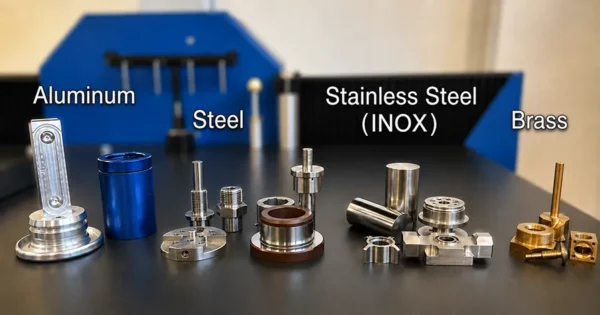
Precision CNC components manufactured from different metals.
Machining Parameters, Tooling and Strategy
Every material requires appropriate cutting speeds, feed rates, depth of cut and tool geometry. Incorrectly selected parameters can lead to overheating, increased tool wear or poor surface finish.
Modern CNC machines provide a high level of repeatability and process control, but the best results still depend on the correct combination of material, cutting tool and machining strategy.
For each project, the machining process should therefore be adapted to the material, geometry of the component, required tolerances and surface-finish requirements.
Machining Stainless Steel
Stainless steel generally presents greater machining challenges than more easily machinable materials. Its toughness can increase cutting-tool wear and place greater demands on machining strategy.
With the correct tooling and process strategy, however, excellent results can be achieved.
Modern approaches such as optimized toolpaths and trochoidal milling can improve machining efficiency, reduce machining time and help control cutting-tool consumption during production.
The Right Material for Reliable CNC Production
Whether the project involves a prototype, a one-off component or serial production, material selection should be matched to the function of the finished part, its operating environment and the requirements of the project.
A good understanding of material properties helps achieve reliable manufacturing, longer component life and consistent quality throughout the CNC machining process.
HDDSMachining combines material selection with appropriate CNC turning, CNC milling and quality-control processes according to the requirements of each component.
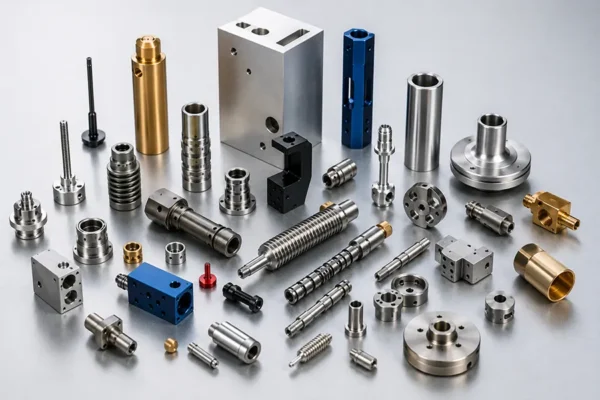
Precision CNC components manufactured from a range of metals and engineering materials.
Frequently Asked Questions
Which materials can be CNC machined by HDDS Machining?
HDDS Machining works with aluminum, steel, stainless steel, brass, copper, titanium and engineering plastics including POM, PA, PEEK and PTFE.
Which engineering plastics can be CNC machined?
Common materials include POM, PA, PEEK and PTFE, depending on the mechanical, thermal and functional requirements of the component.
Why is material selection important in CNC machining?
Material properties influence cutting-tool selection, machining parameters, surface finish, production efficiency and the performance of the finished component.
Is stainless steel more difficult to machine than standard steel?
Stainless steels are generally more demanding because of their toughness and increased tool wear, but the correct tooling and machining strategy can produce excellent results.
Do engineering plastics require a different machining approach?
Yes. Chip evacuation and temperature sensitivity are particularly important because some plastics can change dimensions during or after machining.
Send Us Your Drawing for a Quote
Send us your technical drawing or 3D model and you will receive a quote as soon as possible.
office@hddsmachining.com