
Measurement & Quality Control
Measurement and quality control in metal machining through in-process inspection, final inspection and documented dimensional verification.
Page Content
- Introduction
- What We Measure and What the Client Receives
- Measurement Methods and Equipment
- Tolerances, GD&T and Repeatability
- Quality Control Process
- Measurement Reports and Documentation
- When We Recommend Enhanced Control
- Equipment We Use for Measurement & Quality Control
- Common Client Questions Before Ordering
- Frequently Asked Questions
Measurement & Quality Control in Metal Machining
At HDDSMachining, quality control is not performed only when the product is finished. It is integrated into every stage of production, ensuring that parts meet technical requirements from the start. Measurement and quality control in machining ensure that every part matches the technical drawing and specified tolerances.
At HDDSMachining, quality control is performed on two levels. We distinguish between in-process inspection and final inspection. In-process inspection is carried out by machine operators, while final inspection is performed by quality control personnel in the inspection room. It is also important to note that these two levels of measurement are performed with different measuring devices, which provides an additional level of control.
When required, we also provide measurement reports including dimensions, tolerances and deviations, which is especially important for industrial buyers and supply chains.
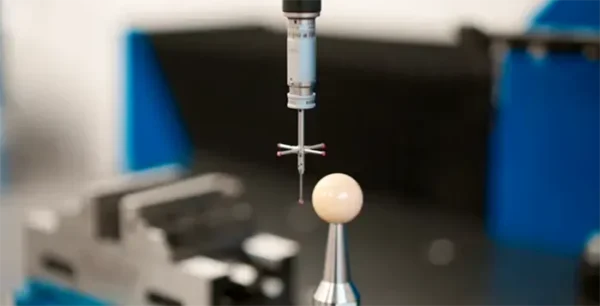
Quality control and tolerance verification in precision metal machining.
What We Measure and What the Client Receives
Quality control covers all key parameters that a part must meet in order to be manufactured according to the technical drawing and defined tolerances:
- Dimensions and tolerances (diameters, lengths, depths, hole positions)
- Geometric accuracy (flatness, parallelism, concentricity, coaxiality)
- Hole position and hole pattern (important for assembly and fit)
- Threads (profile and fit verification where required)
- Surface finish and surface quality (visual and functional inspection of edges, transitions and machined surfaces)
The client receives clear confirmation that the part has been manufactured according to the technical drawing, and for more demanding projects, also measurement documentation that simplifies internal inspection and goods acceptance.
Measurement Methods and Equipment
Depending on part geometry, tolerance requirements and production volume, we combine different measurement methods in order to obtain a reliable picture of dimensions and geometry.
- Precision manual digital instruments (micrometers, calipers, depth gauges) for quick checks and routine control points
- Comparative measurements and gauges (go/no-go) where inspection speed is important in serial production
- Inspection templates and dedicated measuring aids when needed for repeatable parts
- CMM measurement for complex geometries and GD&T requirements (GD&T – Geometric Dimensioning and Tolerancing)
For projects with tighter tolerances or more complex geometries, we recommend defining an inspection plan before serial production starts, including measurement points, inspection frequency and reporting method.
Tolerances, GD&T and Repeatability
A common reason for assembly issues is not a part being out of tolerance, but a mismatch between tolerances and functional requirements. That is why we pay special attention to:
- critical dimensions (fit surfaces, seats, shafts, centering features)
- reference datums (datum A/B/C) – where the part is functionally located in assembly
- GD&T requirements where specified on the drawing (position, coaxiality, parallelism and similar)
In serial production, repeatability is key. That is why inspection is performed at defined intervals, for example on the first part and then periodically during production. Additional checks may be introduced when tools are changed, material batches vary, machining parameters are modified, or when 100% inspection is required.
Quality Control Process
To make inspection truly useful and not just formal, we carry it out through a clear workflow:
- Review of the drawing and tolerances – identification of critical dimensions and control points
- Definition of the measurement list
- First article inspection – checking the first part before continuing the series
- In-process inspection – periodic checks during production
- Final inspection – before packing and delivery
- Documentation – when required: inspection record or measurement report
This approach reduces the risk that a potential error will affect the entire batch and increases reliability for repeat orders.
Measurement Reports and Documentation
For industrial clients, it is often important to receive documentation together with the parts confirming compliance with the technical drawing. Depending on the agreement, we can provide:
- Measurement sheets with measured values and tolerances
- FAI (First Article Inspection) documentation where required
- Inspection plans defining measurement points and control frequency in serial production
If you already have an internal incoming inspection format, such as your own dimensional table, we can adapt to your format in order to simplify and speed up goods acceptance.
When We Recommend Enhanced Control
Enhanced quality control, including more measurement points, more frequent checks and additional documentation, is especially recommended for:
- parts that go into assembly (multiple components, tight fits)
- tighter tolerances and critical functional surfaces
- tooling components (molds, inserts, guide elements)
- repeat serial production where process stability is critical
In such cases, quality control is not an added cost, but a way to keep production stable and avoid delays, rejects and claims.
Common Client Questions Before Ordering
- Can you guarantee the tolerances defined in the technical drawing? – Yes, after reviewing the drawing and confirming the critical inspection points.
- Do we receive a measurement report? – Yes, measurement sheets and FAI documentation can be provided on request.
- Do you perform inspection during serial production? – Yes, we perform first article inspection, periodic in-process inspection and, when required, 100% inspection.
- What information do you need for evaluation? – Technical drawing, tolerances, material, quantity and documentation requirements.
Equipment We Use for Measurement & Quality Control
For measurement and quality control, we use precision inspection equipment from our machine park designed for checking dimensions, tolerances and compliance of finished parts with technical documentation. This level of inspection ensures reliable production quality and stable repeatability for both individual parts and serial manufacturing.
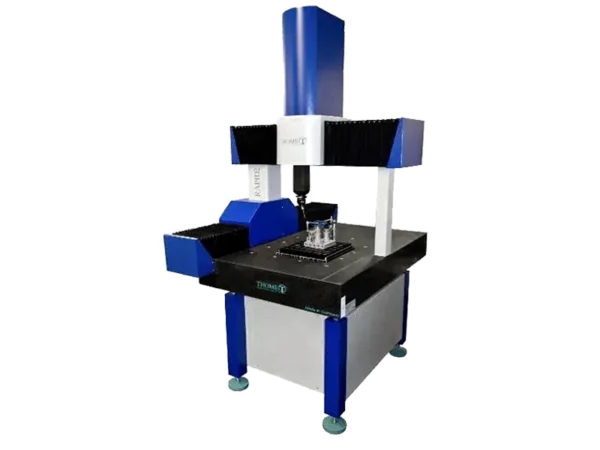
THOME PRECISION RAPID CMM for precise measurement and quality control of finished parts.
Frequently Asked Questions
What is included in measurement and quality control in metal machining?
Measurement and quality control include dimensional inspection, tolerance verification, geometric accuracy checks, surface finish inspection and compliance verification against the technical drawing. Depending on the project, inspection may be performed during production, after machining or both.
Do you provide measurement reports with the finished parts?
Yes. When required, we can provide measurement sheets, inspection records and First Article Inspection documentation. This is especially important for industrial clients, assembly parts and projects with stricter documentation requirements.
What measuring equipment do you use?
We use precision manual instruments such as micrometers, calipers and depth gauges, as well as comparative gauges, inspection templates and CMM equipment for more demanding geometries and GD&T requirements.
When do you recommend enhanced quality control?
Enhanced quality control is recommended for parts with tighter tolerances, critical functional surfaces, assembly fits, tooling components and repeat serial production where process stability and traceability are especially important.
Can you check GD&T requirements and critical tolerances?
Send Us Your Drawing for a Quote
Send us your technical drawing or 3D model and you will receive a quote as soon as possible.
office@hddsmachining.com