
Prototype & Serial Production
CNC prototyping and serial production of metal parts based on technical drawings, with stable quality, repeatability and defined lead times.
Page Content
Introduction: Prototypes and Serial Production in CNC Machining
Prototypes and serial production are two key phases in product development and market delivery — from the initial idea to stable production of a large number of identical parts. At HDDSMachining, we provide complete support through CNC metal machining, including CNC milling, CNC turning, parts manufacturing from technical drawings and quality control.
We work according to the client’s technical documentation, whether 2D drawings or 3D models, and provide precise production of prototypes, test batches and serial production with stable quality, repeatability and defined lead times.
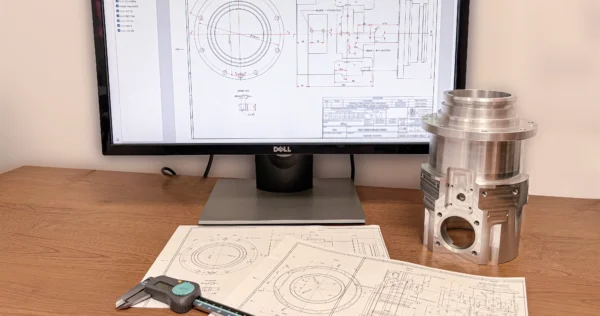
3D model and technical drawing of a machined part.
What We Do: Prototypes and Serial Production
In practice, client requests most often fall into three production categories:
- Prototype – a single part or a small quantity for design and functionality validation
- Test batch – a smaller series for process validation and production preparation
- Serial production – small and large batches with stable repeatability and quality
Regardless of the production level, the key elements remain the same: precise machining, correctly defined tolerances, process optimization and quality control.
When a Prototype Is the Best Choice
A prototype is the ideal solution when you want to verify:
- whether the part physically fits into the assembly,
- its functionality in real operating conditions,
- machining feasibility regarding tolerances, material and geometry,
- cost and production lead time before moving to serial production.
We often receive inquiries from clients who already have a CAD model but need advice on what is practical for machining, where geometry should be adjusted, where tolerances can be optimized and how cost can be reduced without compromising quality.
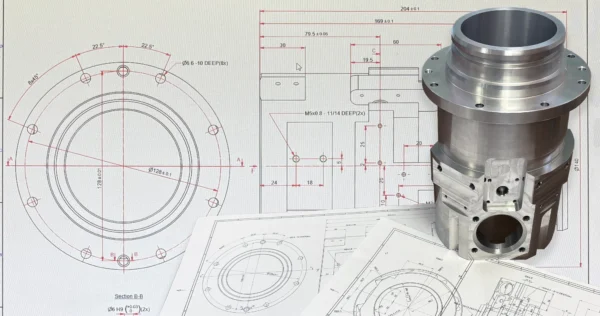
Machining of aluminum, steel, stainless steel and brass.
Serial Production: Small and Large Batches
Serial production means a stable process for manufacturing a larger number of parts with repeatable quality. Depending on the project, we distinguish:
- Small batch – typically 10–200 pcs, often with frequent adjustments and modifications
- Medium batch – 200–2,000 pcs, with an optimized process and defined inspection points
- Large batch – 2,000+ pcs, with process standardization, measurement reports and stable logistics
For serial production, especially important factors are tooling preparation, definition of control points, tolerance documentation and reliable delivery organization.
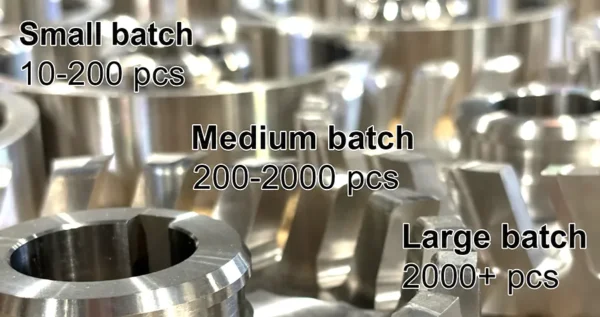
Visual representation of CNC serial production: small batch, medium batch and large batch with stable quality and repeatability.
Cooperation Process and Lead Times
The cooperation process is straightforward. A typical workflow looks like this:
- Send us your technical drawing or 3D model (STEP, IGS/IGES, DWG, DXF) and basic requirements.
- Feasibility analysis and optimization proposal if needed.
- Quotation – price, lead time and quantity.
- Material procurement
- Production – prototype or serial production with defined inspection points.
- Quality control – measurements and documentation as agreed.
- Delivery – agreed packaging and logistics.
Lead times depend on part complexity and material availability, but in practice prototypes are often prioritized because the entire project depends on them.
Materials and Applications
For prototypes and serial production, we most commonly machine:
- structural and tool steels,
- stainless steel,
- aluminum and non-ferrous metals,
- brass,
- titanium and alloys,
- engineering plastics where required.
Applications are broad and include mechanical engineering, automation, energy, tooling, automotive industry, industrial equipment and many other sectors.
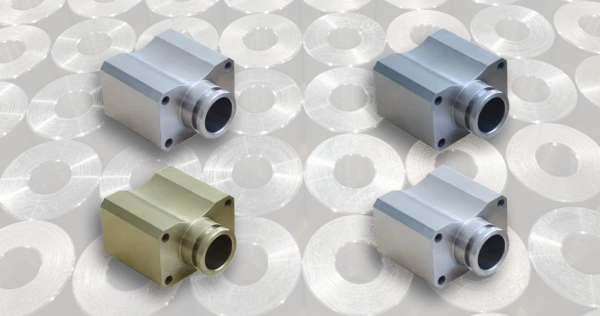
The same CNC model manufactured from different metals – aluminum, brass, steel and stainless steel.
Quality Control and Repeatability
For prototypes, the focus is on design validation, while for serial production the focus shifts to repeatability. That is why we usually introduce:
- First article inspection – the first part as a reference,
- defined control points during the batch,
- measurement reports by agreement using CMM or manual instruments.
If the goal is serial production for industrial use or the EU market, documented quality control and a stable process are what keep the project reliable in the long term.
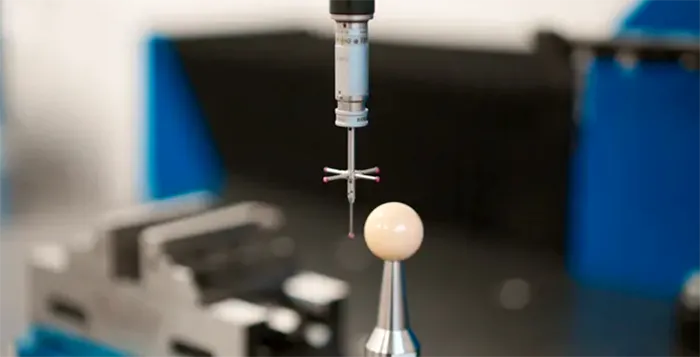
Quality control and tolerance verification in precision metal machining.
Frequently Asked Questions
What is the difference between a prototype and serial production?
A prototype is usually a single part or a very small quantity used to verify fit, functionality, machining feasibility and production cost before moving into serial production. Serial production means manufacturing a larger number of identical parts with stable repeatability and controlled quality.
When do you recommend starting with a prototype?
A prototype is recommended when a new product is being developed, when fit and functionality need to be tested in real conditions, when tolerances or geometry must be validated, or when machining feasibility should be confirmed before launching a serial batch.
Can you handle both small and large serial production?
Yes. We support small, medium and large serial production depending on project requirements, material availability and machining complexity. The process is adjusted to maintain repeatable quality, defined control points and reliable delivery schedules.
Which file formats do you accept for prototype and serial production?
We commonly accept STEP, IGS/IGES, DWG and DXF files, as well as technical drawings and other 2D or 3D documentation needed for CNC machining and production planning.
How do you ensure repeatability in serial production?
Send Us Your Drawing for a Quote
Send us your technical drawing or 3D model and you will receive a quote as soon as possible.
office@hddsmachining.com